Tuesday, August 21, 2012

The Curiosity of Pipe Dreams
 
Life on Mars? Or, Life on Earth?

NBC News, 11th ‎August ‎2012: This week's arrival of NASA's Mars rover Curiosity set the stage for a potentially game-changing quest to learn whether the planet most like Earth ever had a shot at developing life, but follow-up missions exist only on drawing boards.

I sit late at night on the terrace off the sitting room of the top storey and gaze with curiosity up at the stars. The sky is so clear here where no city blurs the darkness with neon, so the heavens blaze with a thousand points of light. I point out to myself the recognisable luminescent clouds of burning gas and spinning rocks that humans named and have tracked for thousands of years.


There’s Saturn and twinkling beyond the edge of the crescent moon is Venus I think to myself, over there is Polaris beckoning me toward some distant location. Overhead are cloudy nebulae, tiny iridescent red giants and the streak of meteorites gathering wishes from lovers, though we know they are melting rock and ice burning through the atmosphere.

My pipe stands beside me, scenting the air with the aromatic fragrance of apple and honeydew, the water bubbling under hot coals, and I breathe in the dreams of infinity.

I’ve been accused of having the occasional pipe dream when I tell people my future plans, yet here I am. Most of those people are the type who never leave their hometown and expect their friends and family to do the same, for all time – as though their ancestors didn’t arrive from somewhere. Unfortunately, many grow old without experiencing the riches of other cultures first-hand and learning the independence and openness of mind that comes from frequent travel and living abroad. Do some people simply lack an innate sense of curiosity?

Are all forms of travel necessary to learn about the human condition? A few days ago I read an ‘open letter’ posted on Facebook that went like this: Dear religion, while you were arguing over which chicken sandwich it was okay to eat, I’ve landed on Mars. Yours, Science. What a load of rubbish. This intentionally antagonistic post is entirely misleading on several counts, and clearly written by someone whose lack of understanding in matters of theological debate is equal to their ignorance of science.

There isn’t a religion in the world arguing over which chicken sandwich is okay – for those that advocate giving up meat, chicken is simply off the menu, and for those that accept fowl eaters as part of their flock how chicken is cooked or served is of no relevance. Secondly, no one has landed on Mars. A camera landed on the surface and sent back photos of rocks and a rugged surface of what appear to be mountains – at extraordinary expense.

What if a person had touched down on the red planet? Does that disprove the notion of God? Not at all, for any God worthy of that title either created what exists beyond the firmament and is therefore independent of our trivial validation, or exists in some alternative realm that is not enslaved to the material, as we currently are. Does it fly in the face of religion? Well, only the most conceited and ridiculously obstinate forms of fundamentalist tripe that refuses to acknowledge allegory and metaphor as legitimate forms of truth and narrative.

A couple weeks ago Jeremy Paxman, a highly intelligent if somewhat arrogant television interviewer in the UK, got in a bit of bother when he said anyone who believes in the literal interpretation of the Genesis creation was “stupid”. Quite right Mr Paxman. However, anyone who doesn’t appreciate the marvellous imagery and symbol-laden telling of our origins with its revealed logic, veiled meaning and predictive sequence of events is also a fool and an imbecile. There is much to be learned about our sense of identity, and consequent to its importance in so many cultures over several millennia a whole host of subsequent literary and creative references to be found in this account (and throughout the entire volume of books we call the Bible) that anyone unfamiliar with the stories and tradition, poems and letters and myths and parables is lost to the world of art and ignorant in the revelation of history.


However, more importantly for the purposes of this post, what if people do visit Mars or any other planet? What good has come from the moon landing over 40 years ago? Teflon? Could the scientific advances made due to rocket-based space flight have come about by directing resources into more human-focused services? In what way has a person landing on the Moon changed life for the better?

Have we gained insight into the human condition or developed energy substitutes that free us from petrochemical dependence? No. Instead, we’ve now given up the shuttle program and resorted to missile based launches to throw inanimate machines into the void in hopes of capturing a photo for those who care about irrelevancies such as where in the universe there might be another planet with earth-like properties.

If we locate another potential life-sustaining rock spinning around a star somewhere on the other side of the Milky Way what knowledge will be gained? Oh look, two hundred million light years away is a probable planet that might possibly have some potential for life forms. Did we need to spend billions upon billions to acknowledge chance through ‘scientific’ corroboration? We will never be able to physically arrive at any planet orbiting a star many millions of light years away – certainly not in our lifetime, and not without entirely revising Einstein’s equations. Talk about pipe dreams!

I wonder whether modern astronomers are actually more enlightened than ancient astrologers from China or Greece. They have telescopes capable of seeing into the past – for that is what we see when we look to the sky at night – light from prehistoric suns, but what more have they taught us?

If a star is a million light years away that means it has taken a million years at the speed of light to reach earth. Given that it takes about 8 minutes for light to arrive on earth from our own sun, and it takes several days for our rockets just to reach the Moon, and Mars is but a stone’s throw in the vastness of space, just try to imagine how far away those stars are from us. Perhaps you’ll need a pipe to dream that far into the future, or rather, the past.

The ancients looked up to the sky and creatively connected the dots to give names to groups of stars; we still call these collections of twinkling lights the constellations. They didn’t really believe those stars were crabs and scorpions or winged horses and raging bulls, however, they recognised that giving semblance of order to those pinpoints of illumination enabled people to use the gift of imagination to better characterize understanding of relationship to these distant objects. Now we ‘discover’ new stars every day as we peer further into the void, and we number them or give them the name of their ‘discoverer’, and who remembers or cares about these practically invisible dots other than committed astronomers.

When I was a child I believed in space exploration and even built replica Apollo and Gemini rockets when that dream was so close to reality. (Though I wonder now about those landings: not the argument of conspiracy theorists on plastic flags, but rather the improbable physics of force of propulsion without resistance of atmosphere).

I’ve read both scientific journals and fantasy fiction on space travel and future development of colonies in distant places, seeing the human race as potentially space conquering beings whose future was among the stars.

Of course, I’d love the excitement of the solar system and black holes and all the other weird phenomena to capture the imagination of today’s youth the way my friends and I were captivated during the Apollo 11 mission, but, I would rather we allocated those funds to eradicating poverty than pictures of lifeless mountains on dead planets.


If you think those pictures of Mars are amazing, look at Earth and see some truly awesome sights, then work to protect our planet rather than sitting idly at a telescope and gazing with irrational unfulfilled curiosity into the emptiness of an airless space.
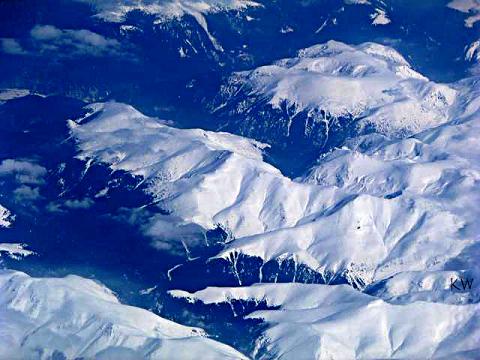
Personally, I prefer mountains on earth with shades of greens and browns rising where rivulets of glacial water enriched fertile soil, to sandy and rough ochre tinged precipices offering strength to vegetation clinging on their edges, through to jagged ashen peaks cutting majestically into the crisp thin air of a life-sustaining atmosphere.

I like our salty oceans and fresh water lakes, turquoise and sparkling clear or murky with algae that glows emerald and jade as it feeds the underwater world, that magnificent variety of life that exists at depth.


I love the forests and jungles teeming with animals and insects of every description that together create an ecosystem we depend on. They deserve our concern as they slowly diminish due to our exploitative intervention in the natural habitat. The many facets of life here on our own planet should be the first priority of science and its extraordinary capabilities in this century.


America’s National Broadcasting Corporation news program reported on 1st ‎August ‎that just over half of the counties in the U.S. are now labelled ‘natural disaster areas’ following the announcement that the U.S. Department of Agriculture added 218 counties in 12 states to the list. Half the nation is deemed a natural disaster yet they spend billions sending cameras to Mars to take pictures of dry and lifeless red mountains that humans are unlikely ever to walk upon. If we do discover water under the surface of Mars will we send giant tankers to collect it for the thirsty back on Earth? They should go back to the drawing board.

Life grows from visions of something better for those who create reality from imagination of purpose and a healthy curiosity, but let’s recognise the truth of existence. We all need Earth to stay healthy; without it we are nothing. Travel is an eye opening experience and discovering the Earth we live on is an astonishing way to encounter ourselves and the culture we create, I recommend it to everyone. In the meantime don’t be deceived; there is no escape to other planets regardless of what science fiction novel or film you might believe in. The idea of space travel to supplement our dwindling resources or discovering alien life that will save the human race from self-destruction is the real pipe dream.

Science can and should play its part in developing solutions to the problems faced by our world. What I’m against is wasting billions on flights of fantasy that put pipe dreams into perspective as plausible calculations of life than a pointless venture by a few into the vacuum of the unattainable.

The only people who benefit from this endeavour are Peter Pan types who never grew up and still think of themselves as explorers of distant stars – the ‘trekkies’ who can’t accept reality and so indulge fantastical dreams of playing astronaut, and of course the military industrialists who wage war on freedom with their spy satellites, nuclear missiles and Reagan-funded laser beams.

Scientists would convince you they have answers to the questions people pondered since the earliest humans attained self-awareness, and they wish to relegate all religious experience to the realm of ethical enquiry. Unfortunately, this seems to be a symptom of the times we live in, an age of information over imagination.

Scientists can only provide a diagram of what already exists; they describe facts of nature in mechanistic terms or replicate observable events, but they don’t create life. An astronomer merely sees what is and always has been, and provides an account of truth that changes with every age, from medieval scholastics to enlightenment rationalists, from Persian astrologers to the mystics of Orthodox Christianity, from Egypt to Peru.

This is the age of the scientist and engineer, most of whom lack the humanistic vision of a creative God who endowed the genesis of life with a spark of spirit, though they frequently tamper with the very foundations of evolution; this too will pass.

Look to the stars and try to calculate the uncountable billions. Look to your heart and feel the beating pulse of age. Look in your lover’s eyes and see the smiling reflection of time’s breath. Look at the sun and recognise the colour of dreams. Look within and appreciate the supremacy of love. Look at us all and sense the opportunity of our age.  Look out, for there are those in this world who would steal this moment to replace wonder with fear and truth with the façade of power.

Look to the future and hope that we can still dream through the marvel of imagination, because that’s where truth is. When that truth is shared amongst equals it becomes authentic. Indeed, fulfil our infinite curiosity, but if you want answers to age-old questions or solutions to today’s problems, look inside your mind and see the light of those stars shine like constellations as thoughts connect to create ideas – that’s where we live and where dreams become reality.

*

There are no rainbows on Mars!

*     *     *

Monday, July 30, 2012

Over the Edge


While extending apologies for not keeping up with the Blog for a while, I'll tell you I've been extremely busy - getting an all-over tan is hard work! Also I've been travelling again and working on some new projects. This week I'm in Antalya, a city of over one million people situated on the Mediterranean coast. Although I'm here interviewing I've managed to take some time to see the sights and will post a few photos as soon as I get a chance to write something and upload to this site. All the best, and seriously, stop watching television and get out into the world!

Wednesday, July 04, 2012

B&B .. A Jolly Sporting Summer

Summer has officially arrived, unpacked its bags and popped the cork on a bottle of chilled wine. Shirts are off; shorts and sandals are on, and tinted glasses that shield the eyes from the searing brightness of the long days complete the wardrobe.

Yes, it’s been an eventful few months, and that doesn’t even include how exciting it’s been for the Queen celebrating 60 years of uninterrupted service to the crown, the great football nations participating in the European Cup or the Olympic torch making its way around Britain in the hands of celebrities, war veterans and patriotic volunteers on its way to London for the grand spectacle of sporting champions and logo-competitive corporate sponsorship.

Between teaching at the elegant and exclusive resort hotel with its 35 swimming pools, squeezing in early summer youth classes with students from the Ukraine, working on my tan and planning a relocation for the autumn, I’ve been back and forth to the UK a couple times and travelled a bit along the coastline of Turkey and islands of Greece to visit favourite sites of interest.

And of course, I’ve been trying to stay in touch with friends near and far and dropping in to galleries and museums whenever and wherever I can.


It was fortunate that after a few days doing coursework in Birmingham I had some free time, providing me the opportunity to see DaVinci’s drawings as well as so many other fine artists on display in the museums this second largest of England’s cities has to offer.The contrast of seeing both Paolozzi and Leonardo, a man who helped change the approach to drawing, together yet from their separate eras, was spellbinding.

I also stopped in to a few commercial galleries to see if there was anything of interest and nearly purchased a limited edition Dali sculpture, but alas I have already stored most of my small collection.

Hopefully, later this year I’ll be arranging to pick-up a beautiful and vibrant painting I saw displayed on Simon Withers’ website,

though I could opt for a limited edition Billy Connolly line drawing or naively executed watercolour by the prodigiously talented Bob Dylan!

Once again though, it was the masters of colour and form that inspired me, and some of the contemporary artists on display reminded me just how worthy modern art can be when connected to significant subject matter.

Whether it’s the rough public sculpture of Anthony Gormley (with fortunate placement of a bird's nest 'halo' behind) or the neat placement of a William Wilberforce likeness (the anti-slavery campaigner spurred on by his faithful wife whose absence is notable), Birmingham clearly appears to value visible arts.

The emblematic façade of the Bullring shopping mall, the stunning Symphony Hall and National Institute buildings greet visitors wandering along the inner city canals. If architecture is your interest, this town has constructions of the exceptional and unusual.


With restaurants and shops aplenty there’s always something to entertain those with cash to burn in Birmingham. A season of festivals and concerts provides an endless variety of music and arts for the culture-minded, while pubs and clubs cater to the noisy after-hours set looking to drown in tasty cocktails and dance to the latest thumping rhythms.

I only recently started going out in this city, but I heartily recommend a couple days sightseeing and exploring for those who manage to escape the pretentious madness of London this summer.

It seems a time of crisis, whether global economic disruption or military conflicts against apparently threatening nations, creates a need for the pomp and circumstance of national flag-waving entertainment.

 
The Romans were expert at diverting public opinion during unsettled times through the use of circus performance and staged gladiator battles, and the states of today (though they’ve yet to learn the importance of bread for everyone) have learned that lesson well. After all, who doesn’t enjoy the spectacle of sports personalities strutting across our television screens; and the regalia of imperial symbolism and celebrity fanfare paraded through the streets do wonders for the loyalty of the masses overwhelmed by the overheads of an ordinary life.

With audiences regularly in the hundreds of millions each of these glorified happenings provide a sensational opportunity for the multinational companies to bombard us with yet more vaguely enticing commercials for all kinds of things we didn’t know we needed till we couldn’t live without them.


As the running shoe and leisurewear manufacturers gear up their factories magazines go into overdrive to promote the high standard of living that most people aspire to attain. Gorgeous models, stick figures in designer outfits, shake their asses and rattle their on-loan jewellery to persuade the celebrity-obsessed hoi polloi that all it takes to be somebody important is the correct seasonal accessory.


Hand-held technological devices assembled in developing nations are becoming increasingly essential to our every waking moment, and their ubiquitous appearance alongside athletes waving medals suggest that you too can be successful with the power of today’s media at your fingertips.

Middle-eastern airlines and specialty beer brands compete in neon and flash lighting across advertising hoardings around the fringes of major arenas for our hard-earned cash, transferred electronically of course.

With the right razorblade, tasty nibble or exclusive scent of some Hollywood heroine, anyone it seems can be part of the club. Sleek, gas-guzzling autos designed by those with more available resources but less common sense than most environmentally sensitive people, are promoted on billboards and in video games played by children. Subsidised by petroleum conglomerates to race across computer displays driven by recognisable faces these pollution machines are heating the world that our constantly running a/c units try to cool down in a race to equalise the ecosystem.

Pop stars happily dance onto the stages of the mandatory commencement concerts and groovy summer festivals and sing of love and consumerism under the blasting fireworks of closing ceremonies for princely sums, as overt advertisers sell yet more reasons to accumulate plastic trash and be part of the all-too-cool-for-school in-crowd.

Yes, the bold and the beautiful are radiating wealth and positively glowing in the beacon of light that is financial freedom.

The eternal torch, that icon of liberty to a synthetic world, is still snaking its way round the Isle of Britain and only recently passed through Derby and Nottingham where friends and family gathered to watch it wind through the streets on its way to the capital city.

As the world awaits the Olympic games, many in less fortunate circumstances suffer through the ongoing oppression caused by famine, greed and war. We should give that a thought.

Millions are starving in scorched central African nations while renegade soldiers turned politicians endlessly debate and negotiate the best deals for themselves in the exploitation of mineral rights in these parched locations. Some of these bastards (oops, I mean international representatives) were even invited to politely dine with the Queen of England at her sixtieth anniversary banquet, and pop-up occasionally to celebrate royal weddings and such, so obviously they’re important as business partners and we shouldn’t complain about the heaps of bodies of dead children in mass graves whose blood is on their hands. Maybe that’s why Her Majesty always wears gloves.

The Formula One calendar races into England for the annual event next week and no doubt all the best people will be in attendance. With so much up for grabs in the reputation stakes it will be yet another highlight of a summer that has Andy Murray thrashing his way through Wimbledon and British drivers topping the F1 leader board.


All this excitement in one summer for a country dealing with ‘austerity measures’ put in place by the barely elected coalition government just seems so very antithetical to the economic difficulties that define the entire state of affairs. There’s a serious depression in European banking circles, people are being made poor and out of work, and there’re wars in places where real people are dying, not to mention a lack of funding for the National Health Service and .. oh, never mind, let’s have a parade! There’s plenty to choose from this year.

Even though winter was long over when last I was in England and the sun was shining warmly throughout my stay, it was still cool enough in the evenings to require a jacket. I spent evenings surrounded by friends old and new around the comfort of a log fire; accompanied by the familiar flavour of locally brewed ale they reminded me why I still enjoy visiting that damp and windy isle.

For all its faults it is a special place and tourists continue to flock to its white cliffs and ancient castles, its massive medieval cathedrals and gothic towns, its trendy and exclusive shopping districts and fashionable nightspots, the famous landmarks and recent attractions and of course everyone hopes for a glimpse of the Queen or, at least, Pippa’s derriere.

Time rolls on and the celebratory occasions that mark the passage of ages are repeated for each successive generation, allowing those who cling to rocks against the sirens’ wail to believe in the special presence of their moment. No amount of sporting leisure or political exercise can turn back the clock of history, and many people are slowing awakening to a realisation of the counterfeit truth behind these extravagant gestures of the privileged.

Competitions are essential to sport – the difference between other leisure activities and sport is the arena of challenge against another participant. But competition has no place in the arts. Whether poetry, music, painting or film, arts are subjective and personal and certainly can’t be evaluated on results in the same manner as games.

To attempt to play out the arts in a forum of competition is always value-laden and biased according to opinion and personal preference of style – who can say whether Magritte is better than Rubens or Titian better than Degas, Bowie better than Sinatra or Beyonce better than Ella, Whitman better than Ovid and Keats better than Goethe or Coppola better than Kurasawa?

Let's not even discuss oranges; as the John Everett Millais painting 'The Blind Girl' illustrates it's difficult to describe the beauty of a rainbow but it can be equally exacting to capture it visually. First shown in 1856 this moving now resides in Birmingham. Though a pre-Raphaelite he painted landscapes and portraits equally with another of my favourites 'Bubbles' at the Royal Academy in London.

Tennis and football are determined in a match played between equals to determine a winner; the arts are a different animal altogether and should never be confused with the activity of competitive sport lest they defeat themselves with the politics of opposition. Then again, as everyone knows when art is bad, agreeing on what is better or best is purely futile and locks one into politics rather than creativity. Collaboration but not committee is the more fruitful option.
It is high time we gracefully accept that we’ve moved on from spectacles of status and changed course, or we become caricatures of the equality and freedom our ancestors strove so hard to achieve. To those in the future who will need real progress and maturity of decision-making to manage the complications of their time, this generation will doubtless appear a superficial example of corruption, consumption and waste.


Life continues in spite of crisis and age and time are no barriers to discovery or experience for those who expect something more meaningful than the circus of daydreams populated by soiled performers of transparent ancient rites and self-congratulatory corporate puppets.

Of course it’s time to enjoy the frivolous festivities of summer, I certainly do, and for now we should all feel free to laugh in the face of adversity even as it encroaches on our everyday lives.

We can dance in the sunshine to the music of love, for this is our time on the earth and we should soak up the pleasures it has to offer, as fruitless as some of the activities may occasionally appear. However, keep in mind that in this age of competing austerity and unbelievable wealth, when some live in luxury and others die for lack of food, in the cognitive dissonance of contemporary society where we turn on the news to be assaulted with horror before a karaoke night out at the pub, the piper is the one calling the tunes, and for sure he’ll want to be paid when the sun goes down and the music fades; and the price will be: our future.

*     *     *

Saturday, June 02, 2012

Northern Lights


First impressions can last a lifetime, while beliefs and attitudes change over time. The opinions of others aren’t always based in a recognisable truth, nor do they always correspond to our own. One need only read reviews on a particular artist or work of art, a film, book or even a luxury hotel or new restaurant to see that evaluations differ according to expectation. Personal experience however, brings invaluable knowledge in formulating genuine understanding of the insider perspective. So it is with people we meet, befriend and even dare to love, and places we visit once as a tourist or a child but then return to after awareness of life has taught us about formulating belief based on instant judgments.

Yesterday I watched as the Olympic torch was carried in procession through the streets of that distinguished northern English city, Liverpool.

A token of freedom and power, the torch signifies continuity and the spark of genius that lives on in the soul beyond the reach of the forged glimmer of temporal concerns into the hopes of creative enterprise. At once a false god and a beacon of truth, the torch is recognised by people everywhere as a symbol of liberty and the spirit of the advocate come to bring light to the darkest regions. In the shadows of history Liverpool was indeed a sinister place, garnering riches from evil pursuits and feeding on the poor and frightened while amassing wealth through politically devious means. Time and the long experience of hard living however, can change everything, like love it can eventually break down the most stubborn and hardened hearts.

Liverpool is and has been many things to the world in its long and chequered history. To some it is a magical realm of extreme excess populated by happy-go-lucky shaggy-haired boys living in yellow submarines and blue meanies who have littered the overgrown strawberry fields with decrepit council houses and boarded-up shop fronts. Since its decline as a major hub of the slave trade and world-renowned shipbuilding it has evolved and changed into a centre of creativity and advanced its situation with a focus on tourism.

Along the Mersey riverfront are stunning new art galleries and hotels and striking postmodern architectural blocks that contain sporting arenas and concert halls, and a sense that the purpose and meaning of life that had escaped from this northern town long before the Beatles made their getaway has been renewed with a vigorous attempt at smart style and a desire for tourist dollars.


Among its crumbling façades are fashionably hip nightspots and must-see places of interest; museums to pop stars and maritime navigation, the slave trade and football heroes sit remarkably comfortably alongside chic restaurants and busy market stalls selling all manner of imported foodstuffs, retro-fashion clothing and locally crafted handiwork.


Boutiques and coffee houses now crowd the narrow and confined lanes that weave labyrinthine through the old town to the visually arresting indoor shopping arcades, Liverpool is learning to accentuate the best of what it once took for granted. These winding paths have become vogue and charmingly inoffensive in their glance back at a cumbersome past through the rose-tinted glasses of nostalgia.

The stylish and expansive Albert Dock area with its massive Ferris wheel, grand amphitheatre and of course a well-stocked regional Tate gallery, has become a centre for modern culture.

Standing proud in the once dirty and teeming docks are masterpieces of contemporary art and magnificent glass and steel structures resplendent as the morning sun reflects off the river.

In the middle of this oasis of wealth one can feel a touch of higher-class elitist values emanating from this industrial capital of another era.

A visit to the Bluecoat gallery confirms the odd need some artists have to pour their personal anxieties onto the stone floors of history. This space, where Yoko Ono first exhibited in the UK is, like so many modern galleries, a place where boundaries are pushed but few actually succeed in defining style with human warmth. Go along if there is something happening, as the events are often better than the substance of the work.


In the dockside Tate one can be persuaded that contemporary art has depth and feeling to balance the intentional twisting of cultural roots. Paolozzi’s homage to Michaelangelo represents the broken dream of Western idealism while Dali’s surreal lobster phone sits comfortably beside Monet’s tranquil ponds and Warhol’s dancing girls.

Chamberlain’s scrap metal appears admirably intentional across from the manufactured needlessness of Lucas as Hockney and Moore compete side by side to reassemble an age of beauty in simplicity of form.

A special exhibition of writing and free expression was on display for those who wanted to partake; current national poet laureate Carol-Ann Duffy had installed a large whiteboard onto which visitors could randomly assemble prewritten words and phrases to create an immediate and temporary work of collective public poetry.

The two big football clubs that contend for dominance in this small city were playing each other on one of my recent forays into the heart of the metropolis, and challenging chants and friendly banter echoed across the street from the doorways of competing Irish pubs offering sports and fist fights for the hometown fans.

American franchises might attract more generic entertainment for most visitors to this friendly city, though in true northern spirit it’s still entrenched in ancient adversarial rivalries that transcend the understanding of most ordinary day-trippers.

Although springtime was pushing buds and green leaves from withered branches and the sun blessed me with its presence for most of my stay, the evenings chilled with a dash of rain that made ducking for cover in the world famous Cavern Club a sincere pleasure, and though definitely a kitsch attraction for those seeking reminiscence, it was one of the highlights of my visit to the old town.


With memorabilia from various stages of the Beatles’ career, especially the days playing as house band in this recreated underground hotspot with its coarse brick arches, one can easily spend hours and dollars relaxing with local ales to the note-perfect sound of tribute bands and look-alike performers.

The singers and musicians do their best to entertain with songs and witty Lennonesque asides, and we weren’t disappointed as everyone sang along with the classics and danced to the bebop rhythm of the rough and ready early numbers while black and white newsreels and films flickered like peeling paint on the bare stone walls. Continuing the theme, the next day we headed over to the Beatles museum and lost ourselves in the groovy pomp of sixties revivalism.

Educational and amusing the attraction is filled with artefacts from the heady days of self-discovery when people believed a song could change the world. It offers a chance to revisit memories or experience a sense of what it must have been like to chart a course to success only to discover that real accomplishment is but noble survival when proclaiming peace in the midst of those who prefer to forge weapons from ploughs than peace from promises.

During European capital of culture year 2008, I was invited to show some of my work in a fabulous gallery space near the Albert Dock. The presence of so many artists and musicians in the city at that time made me feel as though I too had accomplished something special. I’m looking forward to my return to show in Liverpool again, and perhaps next time I’ll stay for longer. 


My first impressions of Liverpool were favourable and it has continued to grow on me, rather like a friend one sees only occasionally but upon meeting again is comfortably talkative as if picking up the thread of an unfinished story.

I suppose this is partially due to the circumstances of my initial foray into the regentrified docklands area, its up and coming attitude and the sense of history around every corner, and also because Liverpool itself is a hospitable place with so much to do and see.

Some people give a great first impression and we are instantly taken with them, but then they leave us with regrets when we discover they aren’t who we thought or hoped they would be, while others impress us with their integrity and grow into lifelong friends; Liverpool is the friend you want to see again.
 
Liverpool welcomes the stranger, invites honest appraisal and holds its head up as a city in transition from the gloomy age of reason and the time of industrial invention to the colourful era of creation and personal discovery.


The beacon of light that shines across the Mersey today will delight and inspire all visitors to this at-once grimy and glittering urban centre. A torch has been lit and the spark of the wonder of tomorrow lives in the rejuvenated hearts of those who call Liverpool home.


Although I’m not a local I feel connected to this wonderfully cosmopolitan city through creative association and endeavour, for surely wherever like minds gather to share thoughts and express positive and heartfelt emotions, in places where feelings and opinions are made tangible and the substance of dreams congeals through age and acceptance into an candid exploration of contemporary culture, I will be a welcome guest.

*     *     *